WHAT QUESTION 3 DOES
MORE CHOICES
NEW VOICES
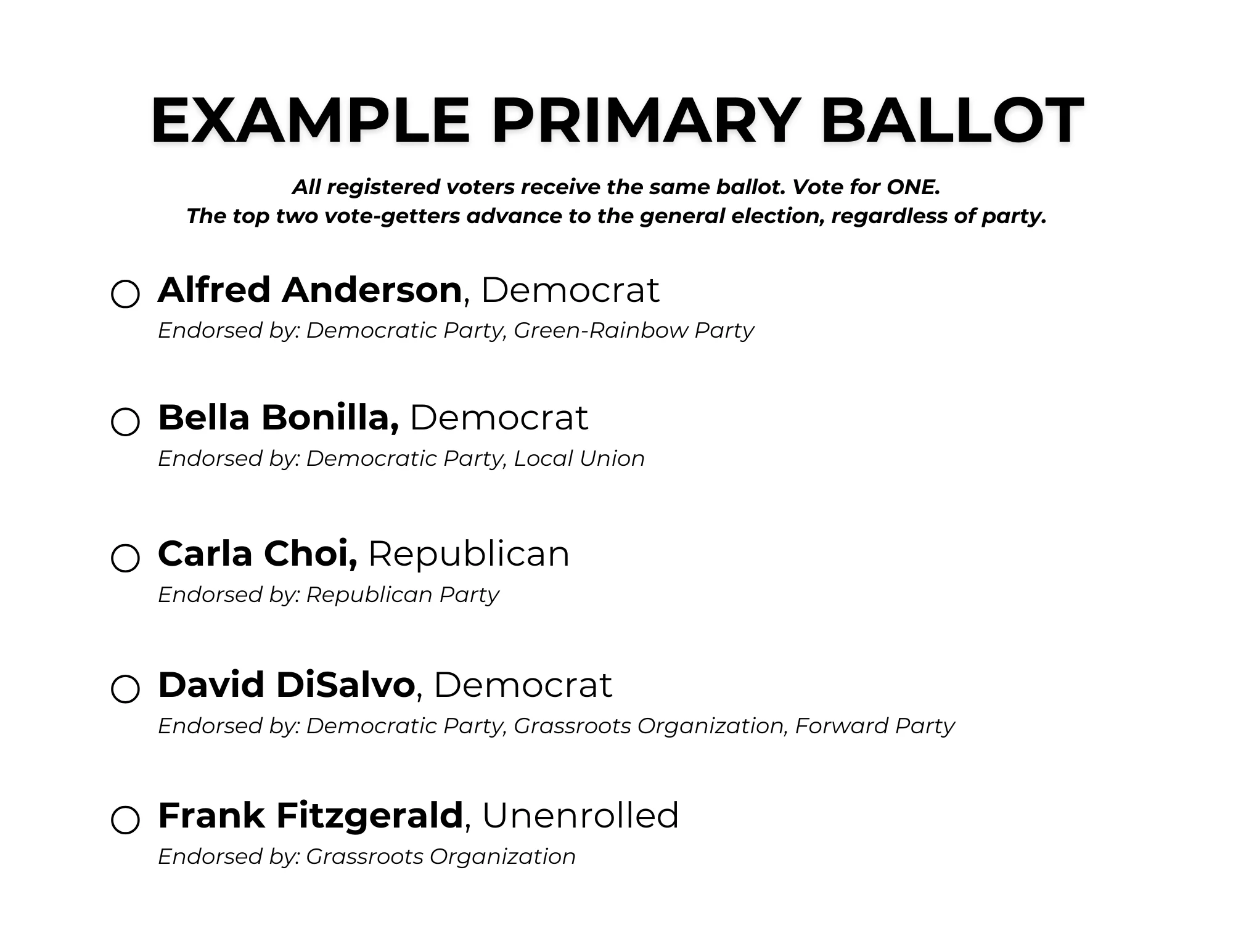
A YES vote creates an all-party primary:
one primary ballot, every candidate on it, open to every voter.
Question 3 is on the Massachusetts ballot on November 3, 2026. A YES vote creates an all-party primary: one primary ballot, every candidate on it, open to every voter. The top two finishers go on to the November election.
Here’s what that means for you.
The problem: most elections in Massachusetts are decided before you vote
This fall, three out of five state legislative races in Massachusetts will have only one candidate on the ballot. No contest in the primary. No contest in November. Nothing for voters to actually decide with their vote.
Massachusetts has ranked dead last in the country for competitive elections for decades. When a race is contested at all, it’s usually settled in a party primary, where turnout is low and the 67% of voters who aren’t enrolled in a party have to pick a party’s ballot just to take part.
When politicians never face a serious opponent, they stop listening. Question 3 changes that.
What Question 3 does
Similar to how we vote in Mayoral elections, but extended and improved:
- One primary ballot. Every candidate for governor, state legislature, Congress and other statewide offices appears on the same primary ballot.
- Every voter sees all the candidates. No need to pick a party-specific ballot, which may or may not include all contested races. Unenrolled voters, Democrats and Republicans can all choose from any qualified candidate in the race.
- Voters see a high-information ballot. Each candidate is listed with the party they belong to, any endorsements they’ve received and agree to from a party or political group. Voters are able to see who’s backing whom.
- Party conventions wouldn’t control ballot access for statewide candidates. Conventions would still be used for important organizing and endorsements.
- The top two go to November. The two candidates with the most votes advance to the general election, whatever their party.
Read the official ballot summary and full text.
What doesn’t change
- Vote for one candidate. In each race, you select one candidate, the top two vote-getters advance to the general.
- Political parties don’t go away. They still organize, still endorse, still campaign. Their endorsements show up right on the ballot.
- Your city and town elections don’t change. Question 3 covers state and federal offices only.
- Campaign finance limits don’t change. Massachusetts keeps its $1,000 contribution cap and its ban on corporate giving.
- November still decides. The primary narrows the field; the general election picks the winner.
Who’s behind Question 3
Question 3 was put on the ballot by more than 120,000 Massachusetts voters who signed the petition. The Coalition for Healthy Democracy is the ballot committee advocating for Question 3. It’s backed by leaders from both parties and independents including former Governor Deval Patrick, former Lt. Governor Kerry Healey, former Congressman Joe Kennedy III, State Auditor Diana DiZoglio, and former MassGOP Chair Jennifer Nassour, along with the NAACP New England Area Conference, the Massachusetts Women of Color Coalition, and dozens more civic organizations.
Learn more about the campaign.
See our full list of endorsers.
See what opponents claim, and what’s true.
Vote YES on 3
More competition means more accountability. Make your representative work for your vote.
Vote YES on Question 3 on November 3!
Sign-up for email updates or learn how to take action on the campaign.